


2-wire kits are simpler plug-and-play; 3-wire kits add constant power for reliable parking mode.
I’ve wired dozens of dash cams and tested both setups. This guide explains 2 wire vs 3 wire dash cam hardwire kit differences, pros and cons, safety notes, installation tips, and how to pick the right kit for your needs. You will get clear, practical advice from real experience and technical logic so you can choose and install with confidence. Additionally, for those specifically using a Vantrue dash cam, I’ve compiled some valuable Vantrue dash cam installation tips to help streamline your process. Understanding the nuances of your device can significantly enhance its performance and longevity. By following these insights, you can ensure optimal placement and connectivity, maximizing the effectiveness of your dash cam.
What are 2-wire and 3-wire dash cam hardwire kits?
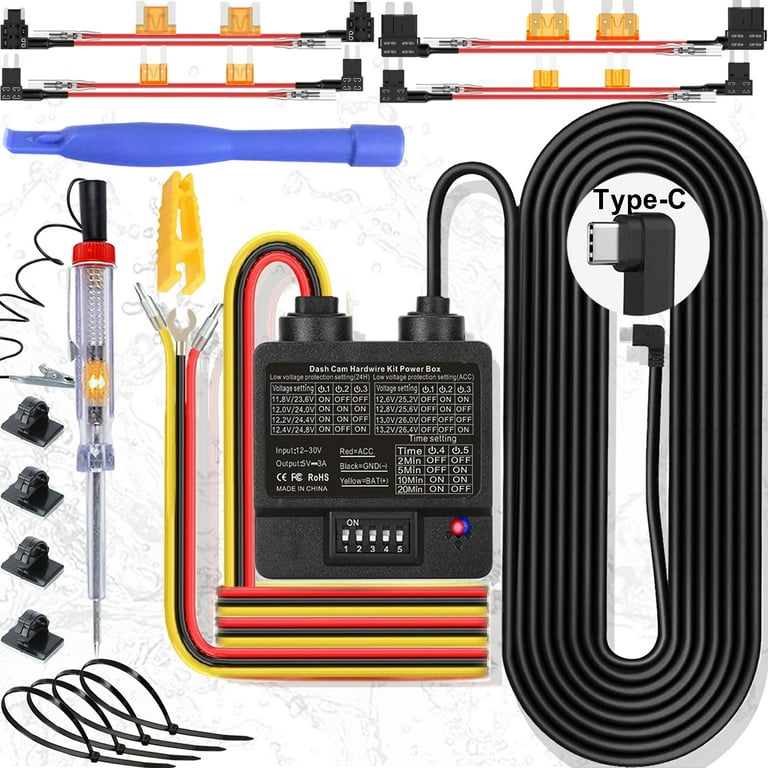
A hardwire kit lets you feed your dash cam from the car’s fuse box. The kit hides wires and powers the camera without a cigarette lighter. The two main styles are 2-wire and 3-wire.
A 2-wire dash cam hardwire kit has:
- One wire for switched ignition power that turns on with the car.
- One ground wire that connects to chassis earth.
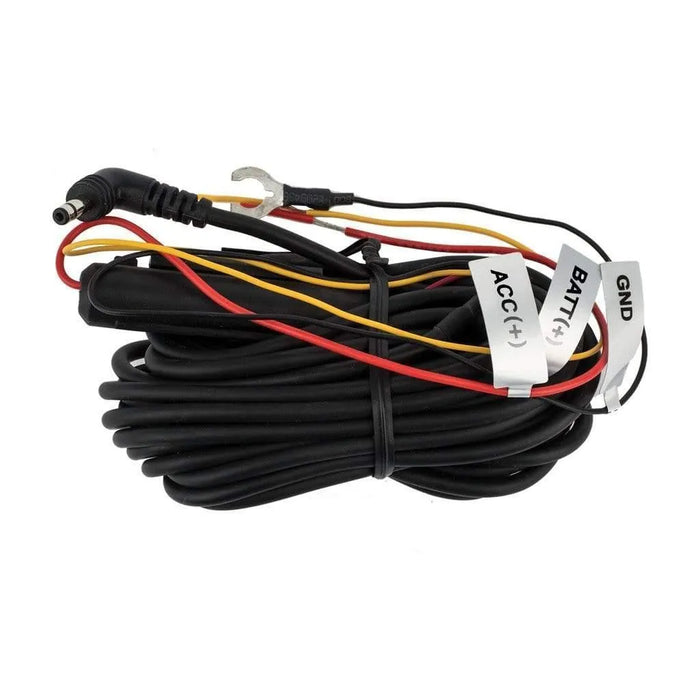
A 3-wire dash cam hardwire kit has:
- One wire for switched ignition power.
- One constant power wire that is always live, even with the car off.
- One ground wire for chassis earth.
The main difference centers on parking mode. A 2 wire vs 3 wire dash cam hardwire kit debate is really about whether you need constant power for features that run when the car is off.

How each kit works — simple technical view
2-wire setup
- Uses ACC or ignition-switched fuse.
- Camera powers only when ignition is on.
- Parking mode can be limited to motion-triggered recording via internal battery or low-power sensor if the camera supports it.
3-wire setup
- Uses both switched and constant power fuses.
- The camera stays powered when ignition is off.
- Offers true parking mode with buffer recording, event-triggered clips, and time-lapse features.
From my experience, a 3-wire dash cam hardwire kit gives a more complete parking mode. A 2-wire is fine for users who want only driving recording and no long-term parking monitoring.

Pros and cons — quick comparison
2-wire dash cam hardwire kit
- Pros:
- Simpler install.
- Lower risk of draining the car battery.
- Good for renters or short-term use.
- Cons:
- No true constant parking mode.
- Limited event detection when parked.
3-wire dash cam hardwire kit
- Pros:
- Full parking mode and continuous low-power features.
- Better protection when car is parked for vandalism or hit-and-run.
- Cons:
- More complex install.
- Greater risk of battery drain without voltage cut-off.
- Often needs a voltage monitor or battery protector.
I once used a 3-wire dash cam hardwire kit on a delivery van. It saved a driver’s insurance claim after a hit-and-run at night. That kind of real value is why many opt for 3-wire despite the extra work.
Installation overview — step by step
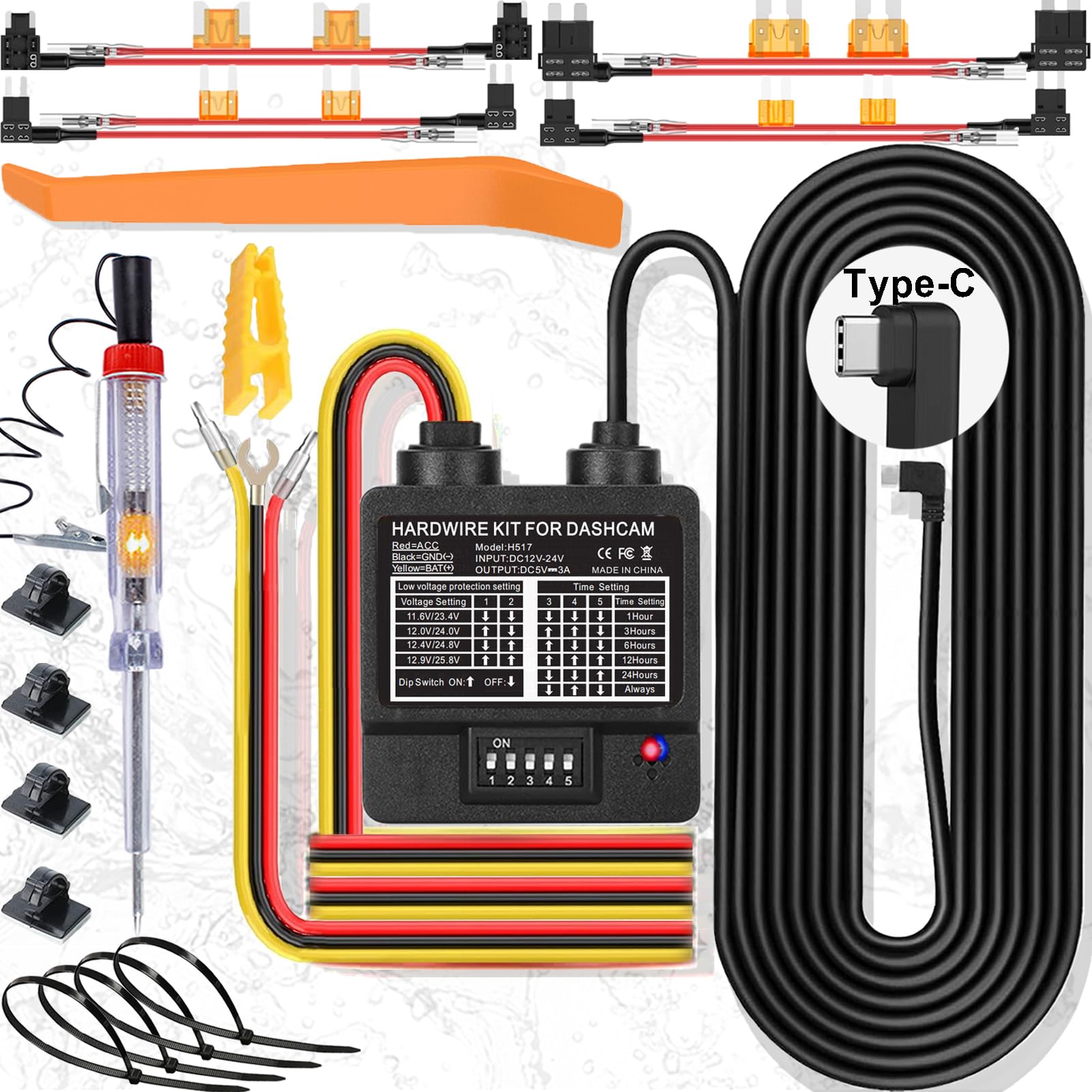
Installing either kit safely matters. Follow these general steps.
- Plan cable route
- Tuck the cable along the headliner, A-pillar, and under trim to the fuse box.
- Identify fuses
- For 2-wire, find an ignition-switched fuse.
- For 3-wire, find both a switched fuse and a constant fuse.
- Use an add-a-fuse or fuse tap
- Tap into the chosen fuses. Ensure the fuse rating matches.
- Ground connection
* Attach ground to clean metal with a ring terminal. - Test
- Turn ignition on/off and verify camera behavior and voltage.
Safety tips:
- Disconnect the car battery if unsure.
- Use a multimeter to confirm fuse statuses.
- Add an inline fuse if the kit lacks one.

Power draw, battery protection, and safety
A key reason to weigh 2 wire vs 3 wire dash cam hardwire kit is battery health. Constant power means the dash cam can draw current even when parked.
Common safeguards:
- Voltage cut-off devices
- These cut power when battery drops below a set voltage.
- Low-current parking mode
- Some dash cams have micro-power sleep modes that draw tiny current.
- Hardwire kits with built-in timers
- These disable parking power after a set time.
From my installs, the safest route on a 3-wire dash cam hardwire kit is to pair it with a voltage monitor or battery protector. That keeps parking protection without killing the battery.

Choosing the right kit for your needs
Ask yourself:
- Do you need parking mode? If yes, favor a 3-wire dash cam hardwire kit.
- Do you worry about battery drain? If yes, use a 2-wire kit or add a voltage protector.
- Are you comfortable with a more complex install? If not, a 2-wire kit or professional install is best.
Matching examples:
- Commuter who parks in secure garage
- 2-wire dash cam hardwire kit is fine.
- Fleet vehicle left on streets overnight
- 3-wire dash cam hardwire kit with voltage cut-off recommended.
- Renter or short-term user
- Use a 2-wire kit or cigarette lighter power bank.
Troubleshooting and practical tips
Common issues and fixes:
- Dash cam won’t power with ignition on
- Check fuse tap position and fuse rating.
- Camera drains battery on 3-wire setup
- Add a battery protector or adjust sleep mode settings.
- No parking recordings
- Verify the camera has parking mode enabled and that the constant power is live.
Practical tips from experience:
- Label fuses and take photos before you tap them.
- Use a dash cam with configurable parking modes.
- Test overnight after install to confirm behavior.

My real-world lessons and mistakes to avoid
I once tapped a constant fuse that controlled interior lights. The car showed odd behavior after the install. Lesson learned:
- Always test the fuse’s function with a multimeter.
- Avoid fuses tied to security or body control modules unless you know them.
Another tip: If you plan to move the camera between cars, a 2-wire dash cam hardwire kit or a powered adapter is easier and less intrusive.

Cost and value considerations
Costs vary by kit and install:
- Basic 2-wire kit
- Lower price and often DIY-friendly.
- 3-wire kit plus voltage protector
- Higher cost but better parking security.
Value decision:
- If you drive in high-risk areas, a 3-wire dash cam hardwire kit is a worthwhile investment.
- For simple driving records, a 2-wire kit saves money and time.
Final recommendations
If you want long-term parking protection and you are okay with a careful install, go with a 3-wire dash cam hardwire kit and add a battery protector. If you want simplicity and low risk, a 2-wire dash cam hardwire kit is the better choice. For many drivers, a 3-wire setup paired with safeguards delivers the best mix of protection and reliability.
Frequently Asked Questions of 2 wire vs 3 wire dash cam hardwire kit
What is the main difference between a 2-wire and a 3-wire dash cam hardwire kit?
A 2-wire kit uses switched power and ground, so the camera only runs with ignition. A 3-wire kit adds a constant power line so the camera can run when the car is off. This enables true parking mode and continuous monitoring.
Will a 3-wire dash cam hardwire kit drain my car battery?
A 3-wire dash cam hardwire kit can drain the battery if it lacks a voltage cut-off or if the camera draws high current in parking mode. Use a battery protector or low-power mode to prevent battery drain.
Can I install a hardwire kit myself?
Yes, experienced DIYers can install a 2-wire or 3-wire dash cam hardwire kit. Use a multimeter, fuse tap, and follow safety steps. If unsure, hire a professional to avoid wiring mistakes.
Do all dash cams support parking mode with a 2-wire kit?
Not always. Some dash cams can use internal batteries or low-power sensors to record while parked on a 2-wire kit, but true continuous parking mode usually needs a 3-wire dash cam hardwire kit and constant power.
Is a 3-wire dash cam hardwire kit worth the cost?
If you need parking mode to catch vandalism or hit-and-run events, a 3-wire dash cam hardwire kit is worth the cost. For basic driving footage, a 2-wire kit is often sufficient.
Read this article: 2k versus 4k dash cam
Conclusion
Choosing between a 2-wire vs 3-wire dash cam hardwire kit comes down to the features you need and how much risk you accept for battery drain. Use a 2-wire kit for simple driving recording and low complexity. Choose a 3-wire kit when you want dependable parking mode and added protection, and pair it with a voltage protector to stay safe. Start by listing your needs, pick the kit that matches them, and test the install thoroughly. If this guide helped, try installing carefully, share your results, or leave a comment with questions.

