

OBD tap is plug-and-play; fuse-tap gives cleaner hardwiring and better parking power options.
I’ve spent years installing and testing dash cams in many cars. This article breaks down dash cam OBD vs fuse with clear facts, practical tips, and real-world lessons. You will learn what each method does, when to choose one over the other, how to install safely, and how to avoid common mistakes. Read on to make a confident, informed decision that fits your vehicle and dash cam needs.
Understanding the basics of dash cam obd vs fuse
Most dash cams need two types of power: constant power and switched power. Constant power keeps features like parking mode alive. Switched power turns the camera on and off with the ignition.
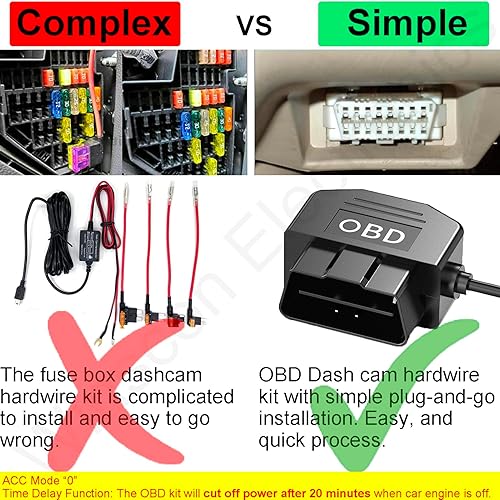
When people compare dash cam obd vs fuse, they mean two main ways to supply power:
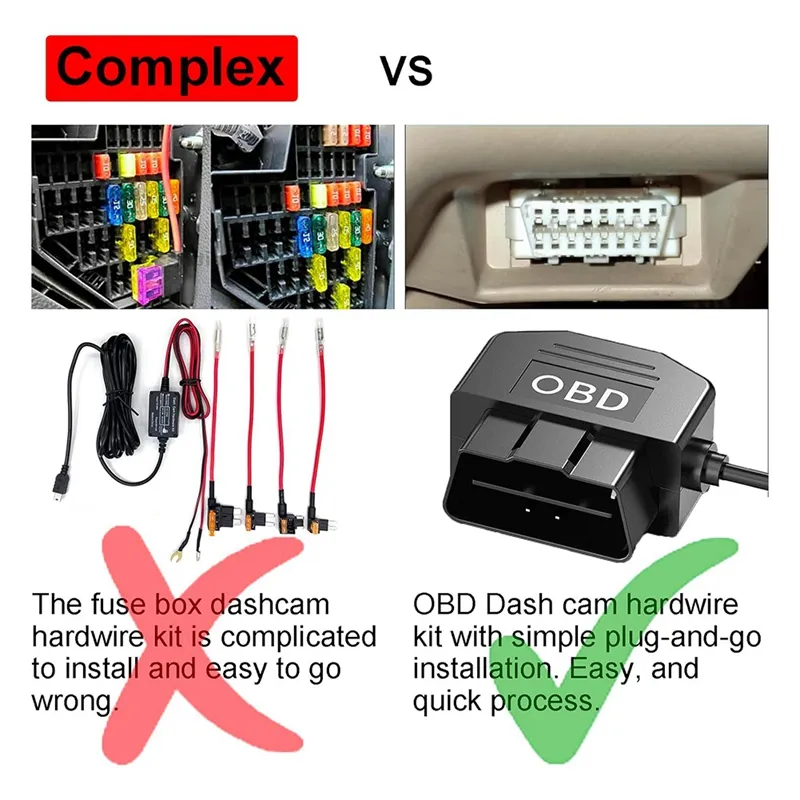
- OBD tap: plugging the camera power adapter into the car’s OBD-II port.
- Fuse-tap (hardwire): connecting the camera to the vehicle fuse box using an add-a-fuse or hardwire kit.
Both methods work well. Each has pros and cons depending on car model, warranty, and parking needs. I will walk you through those differences. You’ll get clear steps and safety checks to avoid battery drain or error codes.
OBD connection: pros, cons, and when to use it
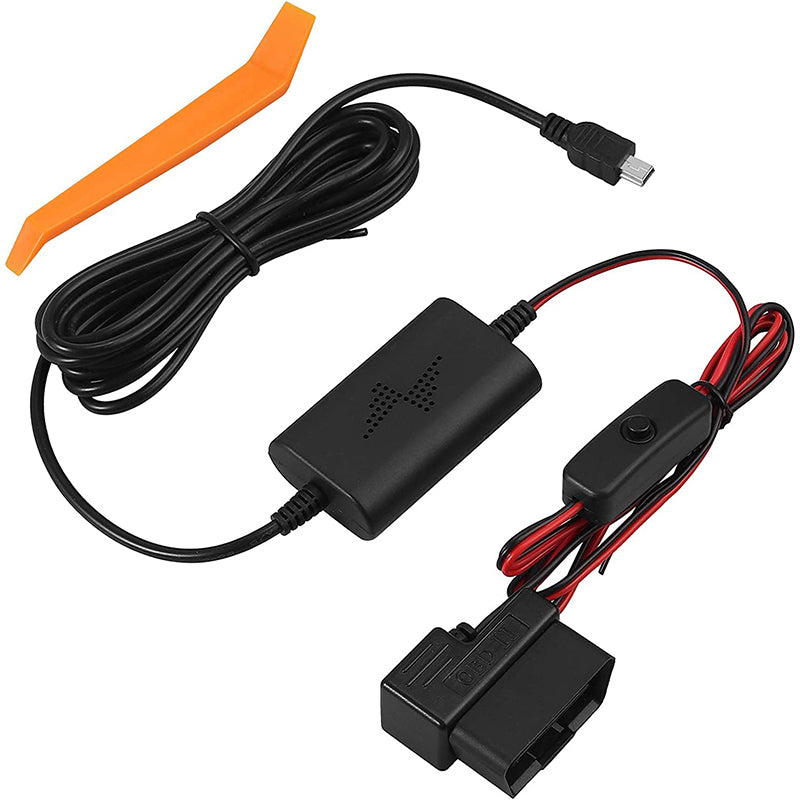
An OBD tap is quick and easy. You plug the dash cam power lead into the OBD-II socket. The camera gets power when the car runs. Many OBD power adapters also offer a low-voltage cut-off and parking mode.
Pros of OBD tap:
- Fast installation with no tools needed.
- Easy to remove if you change cars.
- Built-in safeguards on many OBD adapters to prevent drain.
- No need to access the fuse box or remove trim.
Cons of OBD tap:
- Uses the OBD port that technicians may need for diagnostics.
- Some cars supply constant power at the OBD port; this can drain battery if adapter lacks cutoff.
- Could trigger certain vehicle systems in rare cases.
- Fewer options for a clean hidden install.
When to choose OBD:
- You rent or frequently change vehicles.
- You want a fast, reversible install.
- You prefer minimal disassembly.
I’ve used OBD taps in rental cars and older vehicles. They saved time and left no marks. But once, an OBD tap left the port occupied during a service visit. That caused delays. So I now carry a short OBD extension and inform mechanics ahead.

Fuse tap (hardwire): pros, cons, and how it works
A fuse-tap connects the dash cam directly to the fuse box. This method uses an add-a-fuse adapter or a hardwire kit. You pick a switched fuse for ignition power and a constant fuse if you want parking mode. understanding fuse taps for dash cams is essential for ensuring a reliable power supply. By properly connecting the dash cam through the fuse box, you can avoid battery drainage while capturing important footage. Additionally, it’s crucial to consider the specific fuse types suitable for your vehicle to optimize the performance of your dash cam setup.
Pros of fuse tap:
- Clean, hidden wiring under dash.
- More control over constant vs switched power.
- Can use a low-voltage cutoff hardwire kit to protect battery.
- Less visible to thieves.
Cons of fuse tap:
- Requires basic electrical tools and knowledge.
- Risk of selecting the wrong fuse and disrupting systems.
- More permanent; removal takes time.
- Improper installation can blow fuses or cause faults.
When to choose fuse-tap:
- You want a tidy, professional look.
- You need reliable parking-mode power.
- You are comfortable with simple wiring or will use a pro.
I hardwired a cam in my personal car. The result looked factory and the parking mode lasted all week without issues. I learned to label fuse locations first. That saved time the next day when I swapped in a radar detector.

Head-to-head comparison: dash cam obd vs fuse on key factors
This section compares dash cam obd vs fuse across practical criteria.
Power reliability
- Fuse tap gives consistent access to constant and switched lines.
- OBD can be reliable but varies by vehicle and adapter quality.
Parking mode
- Fuse hardwire with low-voltage cutoff offers the best parking mode performance.
- OBD adapters with built-in cutoff work well but may be less configurable.
Installation time and skill
- OBD tap is quick and simple.
- Fuse tap takes more time and basic electrical skill.
Aesthetics and theft risk
- Fuse-tap yields a discreet install.
- OBD leaves a visible adapter in the port.
Vehicle compatibility and warranty
- Some dealers say OBD use is harmless. Others prefer no persistent devices in ports.
- Hardwiring might be seen as modification. Check warranty and lease terms.
Cost
- OBD adapters are often cheaper upfront.
- Hardwire kits cost more but offer long-term benefits.
When you weigh dash cam obd vs fuse, think about daily use, how often you park, and whether you want a clean look. For my commute car, I prefer fuse-tap with a low-voltage kit. For rental trips, I keep an OBD adapter in my bag.
Power, safety, and vehicle compatibility considerations
Understand these technical points before deciding on dash cam obd vs fuse.
Constant vs switched lines
- Constant power supplies 12V at all times. Use it for parking mode.
- Switched power supplies power only with ignition on. Use it to turn camera on/off.
Low-voltage cutoff
- Protects battery by cutting power when voltage drops below a set value.
- Essential for parking mode to avoid a dead battery.
Bus and CAN systems
- Some modern cars use complex networks. Tapping the wrong fuse may disrupt airbags or other systems.
- Always check the fuse diagram and test with a multimeter.
OBD port behavior
- The OBD port wiring varies by make and model. Some ports supply ignition-switched power; others do not.
- Probe with a multimeter so you know what power the OBD adapter will get.
Professional advice
- If you are unsure, consult the vehicle manual or a trusted installer.
- A short test and correct fuse selection prevent costly mistakes.
I once selected a radio fuse by mistake. The radio lost memory settings after I used the wrong fuse slot. That taught me to test each fuse with a meter first and to label things clearly.

Installation steps, tools, and estimated costs
Here are simple step-by-step guides and cost ranges for both methods.
OBD tap installation
- Test OBD port power with the ignition on and off.
- Plug in the OBD power adapter.
- Route the cable along trim and tuck it behind the headliner if desired.
- Secure the cable and camera mount.
Tools and cost
- Tools: none required, optional trim tool.
- Cost: low. Many OBD power cables cost under $30.
Fuse-tap installation
- Identify a suitable switched fuse and a constant fuse using the fuse box diagram.
- Use an add-a-fuse adapter or hardwire kit.
- Connect ground to a known chassis ground.
- Route and hide the cable, test power, then secure everything.
Tools and cost
- Tools: trim tools, multimeter, pliers, screwdriver.
- Cost: moderate. Kits range $20–$60. Professional install $50–$150.
Safety tips
- Disconnect the battery if you are unsure.
- Replace blown fuses with correct ratings.
- Test before finalizing the install.
I recommend doing a dry test to verify that the camera turns on and off with ignition. That check avoids surprises later.

Real-world tips, mistakes to avoid, and recommended practices
Practical advice from hands-on installs and testing.
Tips to follow
- Test fuse behavior with a multimeter first.
- Use a low-voltage cutoff if you want parking mode.
- Label connections so future troubleshooting is fast.
- Use adhesive cable clips to avoid rattles.
- Keep a small fuse kit in the car.
Common mistakes
- Choosing a fuse that affects critical systems.
- Forgetting to set the correct cutoff voltage.
- Leaving the OBD adapter plugged in during service visits.
- Using too-long cable runs that hang visibly.
Personal note
- I once did a quick install and missed securing the cable. It rubbed against the A-pillar and wore through the insulation. Since then, I tuck and clip every run.
When deciding dash cam obd vs fuse, pick the method that fits your needs and skills. If you want a pro look and reliable parking mode, hardwire it. If you need speed and portability, the OBD tap is great.
Frequently Asked Questions of dash cam obd vs fuse
What is the main difference between an OBD tap and a fuse-tap for dash cams?
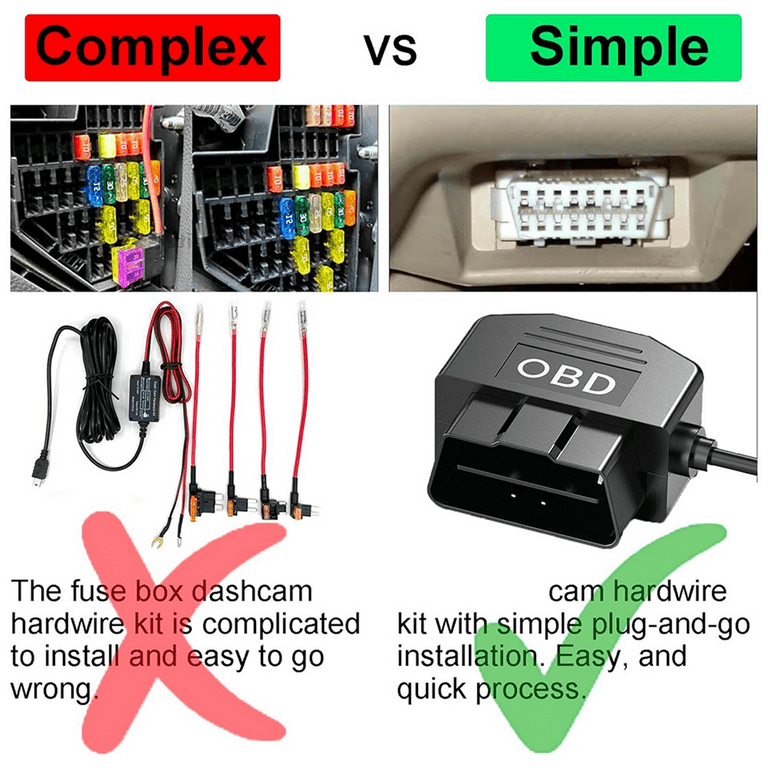
The OBD tap plugs into the diagnostic port for a quick, reversible install. The fuse-tap connects to the fuse box for a cleaner, more permanent hardwire.
Will an OBD tap drain my car battery overnight?
It can if the adapter supplies constant power and lacks a low-voltage cutoff. Many modern OBD power adapters include a cutoff to prevent battery drain.
Is hardwiring a dash cam risky for my car warranty?
Hardwiring can be seen as a modification by some dealers. Check your warranty terms and consider using a reversible install or professional installer.
Can I install a fuse-tap myself without professional help?
Yes, if you know basic car electrical safety, can read a fuse diagram, and have a multimeter. If you are unsure, hire a professional.
Which option is better for parking mode?
A fuse-tap with a dedicated low-voltage cutoff is usually best. Some OBD adapters also support parking mode but may be less flexible.
Conclusion
Choosing between dash cam obd vs fuse comes down to your priorities. If you value speed and portability, the OBD tap will serve you well. If you want a clean, reliable install and strong parking performance, a fuse-tap hardwire is the better choice. Start by testing your car’s power sources and plan the wiring route. Take your time during installation. That careful approach pays off with a dependable dash cam setup. Try one method in a weekend project, or consult a pro if you want a flawless finish. Leave a comment to share your experience or ask a specific question.

