


Connect a relay by wiring the coil to ACC and ground, with fused constant 12V to the common terminal.
I’ve wired many dash cams and relay installs. This article explains how to connect a relay switch for car dash cam in clear, practical steps. You will learn what each relay terminal does, which wires to tap, how to use fuse taps and inline fuses, and how to test the circuit safely. I write from hands-on experience and will point out common mistakes and simple fixes so you can complete a neat, reliable install.

Why use a relay switch for your dash cam
A relay adds safe switching and isolates the dash cam from heavy currents. Using a relay helps the dash cam run in parking mode without straining accessory circuits. It also prevents backfeed that can drain your battery or cause electrical faults.
A relay lets you supply constant battery power through a fused feed while using the ignition (ACC) as a control signal. This ensures the dash cam only records as you want and gains clean power for parking mode features. Using a relay is a professional way to hardwire a dash cam and avoid unreliable cigarette-plug setups.
Parts and tools you need
- Relay 4-pin or 5-pin (30, 85, 86, 87, optional 87a) rated 30A–40A
- Inline fuse holder and appropriate fuse for camera draw (3A–10A typical)
- Fused constant 12V lead (to battery positive)
- Fuse tap or add-a-circuit for ACC or ignition fuse
- Wire of appropriate gauge (18–22 AWG for camera, 16–18 AWG for relay feed)
- Ring terminal and crimp connectors
- Multimeter or test light
- Wire stripper, crimper, electrical tape, zip ties
- Heat-shrink tubing or solder for secure joints
Knowing how to connect a relay switch for car dash cam starts with good parts. Choose a quality relay and fusion protection. The right tools make a clean job and keep the car wiring safe.

Understanding relay wiring and car circuits
Relays have standard terminal labels. Knowing these makes wiring predictable and safe.
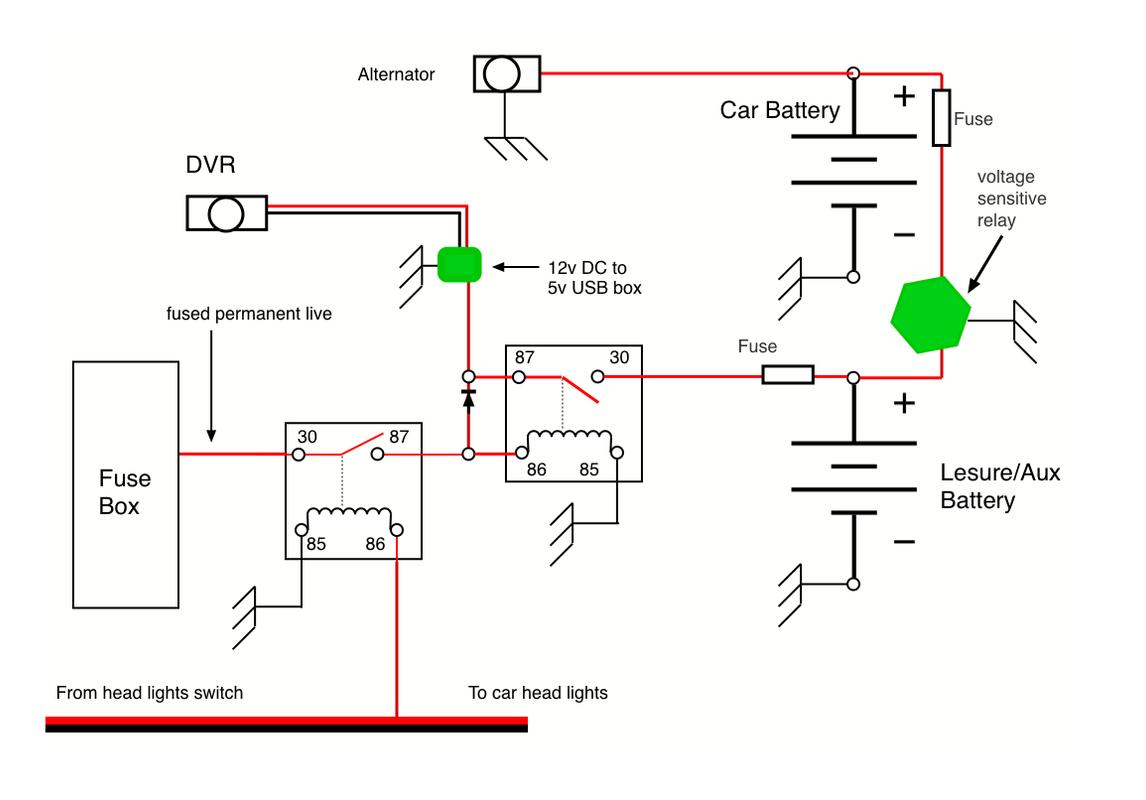
- Terminal 85: relay coil input (connect to ACC or control signal)
- Terminal 86: relay coil ground (connect to chassis ground)
- Terminal 30: common power input (connect to fused constant 12V)
- Terminal 87: normally open (NO) output (connects to dash cam power when coil energized)
- Terminal 87a: normally closed (NC) output (only on 5-pin relays; connects when coil is not energized)
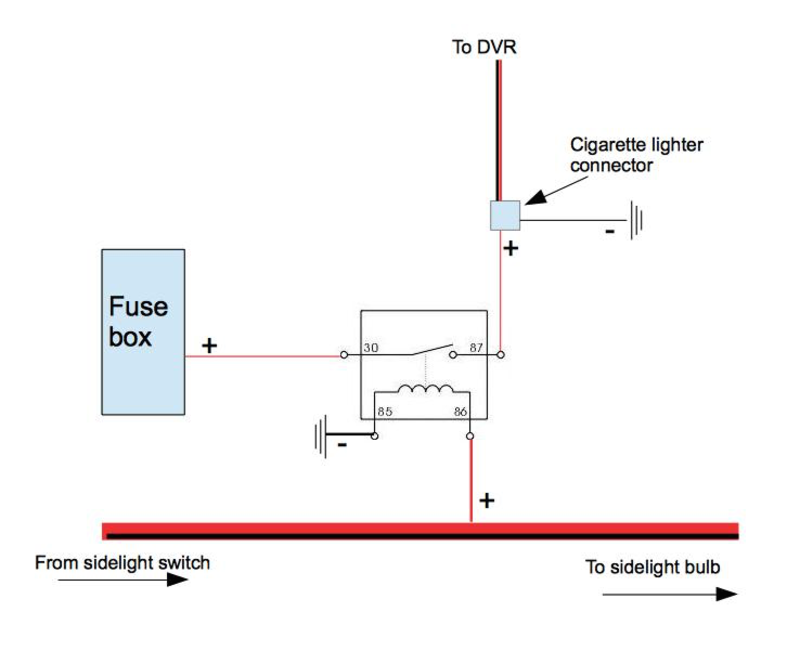
When you learn how to connect a relay switch for car dash cam, remember this: the coil (85/86) is the switch trigger and 30/87 is the switched power path. Energize the coil and 30 connects to 87. De-energize and 30 is isolated (or connected to 87a if present).

Step-by-step: how to connect a relay switch for car dash cam
Follow these steps for a typical install that uses ignition (ACC) to control a fused constant battery feed. This setup powers the camera when the car is on and allows parking mode to use battery power safely.
- Plan the install location
- Choose a relay mount near the fuse box or behind the dash.
- Keep wires short and away from moving parts.
- Prepare the permanent 12V feed
- Run a fused wire from the battery positive to relay terminal 30.
- Place an inline fuse near the battery (3A–10A based on camera specs).
- Find the ACC (ignition-switched) fuse
- Use a multimeter or test light to identify a fuse that is hot with key on and off with key off.
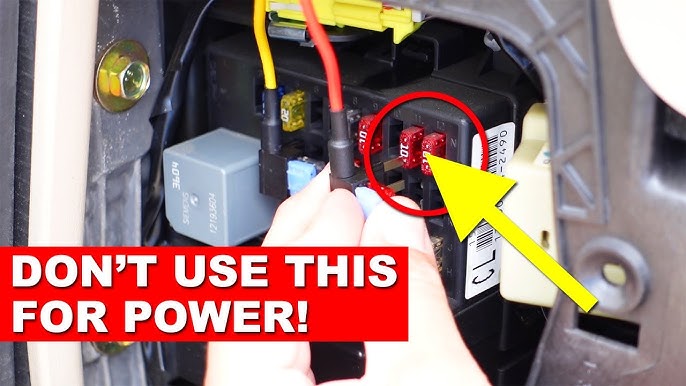
- Use a fuse tap to pick off ACC power without cutting factory wires.
- Wire the relay coil
- Connect ACC (fuse tap) to terminal 85.
- Connect terminal 86 to a good chassis ground.
- Wire the dash cam power
- Connect relay terminal 87 to the dash cam’s red power lead.
- If your camera needs a switched ground instead of switched positive, wire the camera ground through the relay in place of the power lead. Note camera design before wiring.
- Finalize connections
- Secure all crimped joints with heat-shrink or solder.
- Tie wires neatly and avoid tension on terminals.
- Recheck fuse sizes and wiring direction.
- Test the system
- With the fuse installed and battery connected, turn the key to ACC. You should hear the relay click and the dash cam should power on.
- Turn the key off. The camera should switch to parking mode or power off per your camera settings.
If you follow these steps you will know how to connect a relay switch for car dash cam correctly and safely. Double-check the camera manual to confirm whether it expects a switched positive or switched ground and wire accordingly.
Testing, troubleshooting, and tips
Verify relay operation
- Listen for a click when turning ACC on and off.
- Measure voltage at terminal 87 when ACC is on.
Common problems and fixes
- No click: swap coil wires or test coil continuity between 85 and 86.
- Camera stays on: check if 87a wiring was used by mistake or if ACC is actually hot when off.
- Battery drain: add a low-voltage cut-off or use an intelligent hardwire kit designed for parking mode.
Practical tips
- Use a 5-pin relay only if you need NC behavior. Most installs use a 4-pin (no 87a).
- Always fuse close to the battery on the constant feed.
- Label wires so future diagnostics are easier.
These checks help when learning how to connect a relay switch for car dash cam. I often test for voltage at each terminal before finalizing the dash trim. It saves time and prevents rework.

Safety, legal, and best practices
Safety first
- Disconnect the negative battery terminal when tapping battery power or doing major wiring.
- Use proper fuse sizes and rated wires.
- Avoid routing wires near airbags, steering column, or hot engine parts.
Legal and warranty considerations
- Hardwiring may affect vehicle warranty. Check your vehicle terms.
- Ensure installation doesn’t block driver view and complies with local laws.
Best practices for longevity
- Use dielectric grease on exposed terminals.
- Secure relay with a proper mount, not loose tape.
- Consider a professional installer if unsure.
Following these rules will help you connect a relay switch for car dash cam without causing damage or safety issues.
Personal experience: mistakes I made and lessons learned
I once wired a dash cam and fed ACC to the wrong relay terminal. The camera never entered parking mode. After testing continuity, I realized the 87a contact was used instead of 87. Lesson: mark relay pins before finalizing.
Another time I skipped an inline fuse near the battery. A short melted insulation and cost a new wire harness. Now I always fuse at the battery and use quality connectors.
Practical tips from my installs
- Use a multimeter frequently. It prevents guesswork.
- Make one tidy bundle for the camera harness so future maintenance is easy.
- If the car has a body control module, test ACC spots carefully. Not all switched circuits behave the same.
These hands-on mistakes improved my approach to how to connect a relay switch for car dash cam. You can avoid them by testing and using proper fusing.
Frequently Asked Questions of how to connect a relay switch for car dash cam
What size fuse should I use when hardwiring a dash cam?
Use a fuse sized to the camera’s current draw plus margin. Most dash cams draw 0.2A–1A; a 3A–10A fuse is common depending on additional accessories.
Can I use a 5-pin relay instead of a 4-pin for a dash cam?
Yes. A 5-pin relay adds a normally closed contact (87a). Use 4-pin when you only need normally open switching. Ensure you wire the correct terminal for your intended behavior.
Should I switch the positive or the ground for my dash cam?
Most dash cams expect a switched positive. Check the camera manual. Only switch ground if the camera explicitly supports a switched ground input.
Will hardwiring drain my car battery when parked?
It can if not done correctly. Use proper fusing, a low-voltage cut-off, or an intelligent hardwire kit to prevent battery drain during long parking periods.
Do I need professional help to install a relay for my dash cam?
If you are comfortable with basic auto electrical work and have a multimeter, you can do it yourself. Get professional help if you are unsure about locating ACC circuits, working near airbags, or if your car has complex electronics.
Conclusion
You now have a clear roadmap for how to connect a relay switch for car dash cam. Start with the right parts, map the relay terminals, fuse the constant battery feed, use ACC for the coil trigger, and test thoroughly. Use tidy wiring and safety steps to avoid mistakes I faced early on.
Take action: gather the parts listed here and plan a safe install. If you try it, share your experience or questions in the comments.

