


Supercapacitors offer longer life and safer performance than batteries in most dash cams.
I’ve spent years testing and installing dash cams and related power systems. In this guide I compare dash cam supercapacitor vs battery with clear facts, hands-on insights, and buying advice. You’ll learn how each power option works, real-world pros and cons, installation tips, and which choice fits your driving needs. Read on to make a confident, informed decision about your next dash cam.
Read: Battery Vs Capacitor Dash Cam: Which Is Better 2025
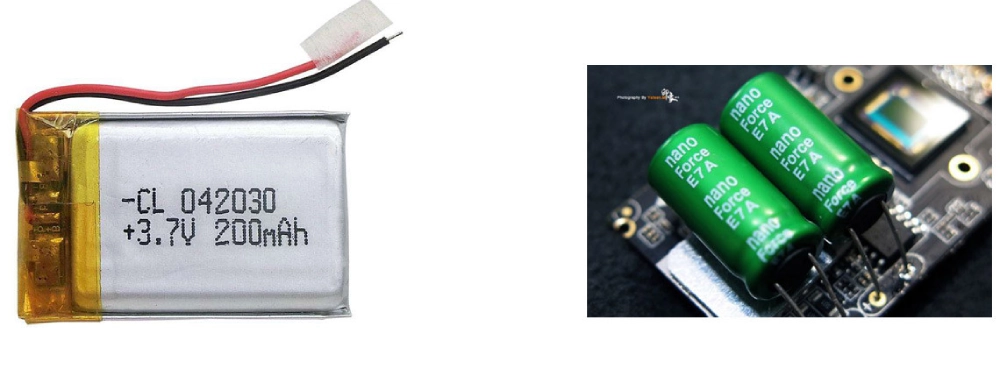
How supercapacitors and batteries work in dash cams
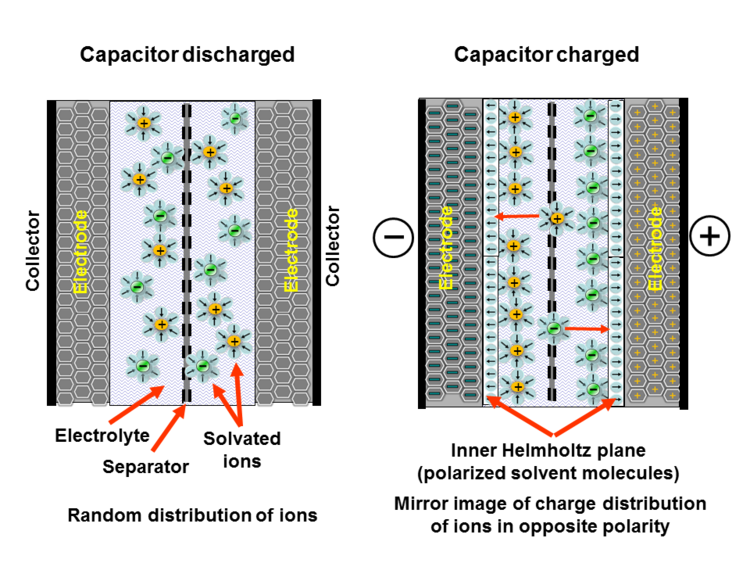
Supercapacitors store energy electrostatically. They charge fast and release energy quickly. They do not use chemical reactions. That means fewer thermal and aging issues. In dash cam use, a supercapacitor gives short-term power to safely save files and shut down after power loss.
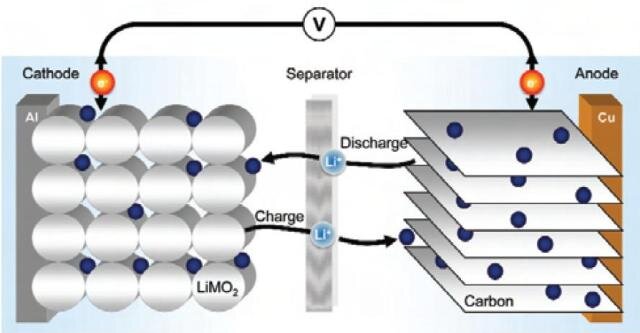
Batteries use chemical reactions to store energy. Common types in dash cams include lithium-ion and lithium-polymer. They hold more energy for longer standby times. Batteries give continuous power for parking mode features. But they age, swell, and can be sensitive to heat.
dash cam supercapacitor vs battery is a choice between quick, durable power and longer runtime with higher energy density. I prefer supercapacitors for daily commuters in hot climates. Batteries work well for drivers needing long parking surveillance.

Key advantages of a supercapacitor for dash cams
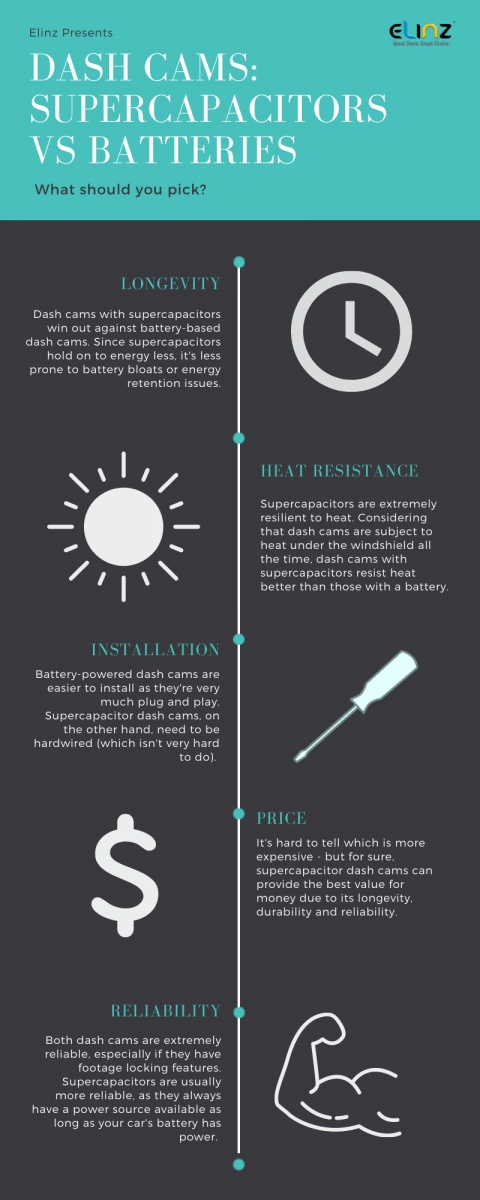
Supercapacitors shine in a few areas. They handle heat better than most small batteries. They can last hundreds of thousands of charge cycles. That means multi-year reliability with minimal capacity loss. They also fail safer — they rarely swell or catch fire.
Other practical benefits:
- Fast charge times that are useful when you start the car often.
- Wide temperature tolerance for hot dashboards.
- Longer operational life, reducing replacements.
- Reliable short-term power to write video and close files during shutdown.
From my shop work, dash cam supercapacitor vs battery decisions usually hinge on the environment. In hot cities, supercapacitors reduce warranty calls and device failures.
Key advantages of a battery for dash cams
Batteries bring strengths that supercapacitors lack. They store more energy per volume. That allows extended parking mode recording without drawing vehicle battery or needing hardwire kits. Batteries can power the dash cam for hours after engine shutdown, depending on size.
Other practical benefits:
- Longer continuous recording when parked.
- Better for remote or long-term surveillance needs.
- Smaller devices can still get substantial runtime via higher energy density.
I’ve used battery-backed dash cams for long trips and remote parking duty. They gave peace of mind when I needed continuous recording overnight.

Downsides and risks: supercapacitor vs battery
Both options have trade-offs. Supercapacitor limits:
- Short runtime — typically seconds to a few minutes of backup power.
- Less useful if you need long parking recording.
- Larger physical size for big energy needs.
Battery limits:
- Degrades over time; capacity falls.
- Heat can damage batteries and shorten life.
- Possible swelling and safety concerns if poorly managed.
- Requires smart battery management to avoid damaging the car’s battery.
In my experience, improper battery installation leads to the most problems. I’ve seen devices fail because parking drain was not monitored. dash cam supercapacitor vs battery often comes down to accepting these trade-offs.
Performance and reliability in real-world use
Real driving tests paint a clear picture. In hot summers, battery-equipped dash cams often lose lifespan quickly. Supercapacitor models keep working and save footage reliably. In cold conditions, battery performance can drop, reducing runtime. Supercapacitors remain stable across a broader temperature band.
Consider these practical results:
- For busy city drivers with short trips, supercapacitors reduce data corruption.
- For long-stay parking or remote surveillance, batteries allow longer recording spans.
- Overall reliability tends to favor supercapacitors for everyday use.
I recall a fleet test where supercapacitor units had far fewer returns over 24 months. That confirmed what lab specs suggested.

Installation, maintenance, and safety tips
Install correctly to avoid problems. Follow these steps:
- Check compatibility with your dash cam model.
- Use the manufacturer’s hardwiring kit if you need parking mode.
- Place the dash cam where heat is managed and airflow exists.
- Set voltage cutoffs to protect your vehicle battery when hardwiring.
Maintenance pointers:
- Update firmware regularly.
- Inspect the unit yearly for warping or discoloration.
- For battery dash cams, watch for swelling and stop using if you see it.
Safety note: If you are unsure about hardwiring, hire a pro. A bad install can drain a car battery or cause electrical issues. dash cam supercapacitor vs battery choices change how you handle installation and safety.
Cost, lifespan, and environmental impact
Cost and life differ sharply:
- Supercapacitors usually add little to unit lifetime costs due to longevity.
- Batteries are cheaper upfront on some models, but may need replacement in 2–4 years.
- Supercapacitors often reduce long-term service and replacement costs.
Environmental notes:
- Batteries need careful recycling.
- Supercapacitors are more benign in disposal and have longer usable life.
From a total-cost view, dash cam supercapacitor vs battery outcomes favor supercapacitors for lower long-term waste and fewer replacements.
Which option fits common use cases
Match your needs to the right power type:
- Daily commuter with short trips: supercapacitor is ideal.
- Long-term parking surveillance or remote monitoring: battery is better.
- Fleet vehicles in extreme heat: supercapacitor for reliability.
- Overnight or long-stay security: battery for extended recording.
I once recommended a supercapacitor dash cam to a rideshare driver. It saved them from hourly reboots and corrupted footage. Another time a homeowner chose a battery model for long overnight parking at a remote location.

Making the decision: practical checklist
Use this checklist before buying:
- How long do you need to record when parked?
- Do you operate in hot or cold climates?
- Is long-term reliability more important than extended runtime?
- Can you professionally hardwire the camera?
- Do you prefer minimal maintenance and fewer replacements?
Answering these quickly narrows your choice in the dash cam supercapacitor vs battery debate.
Read related: How Long Can Car Battery Run A Dash Cam: Real Runtime Tips
Frequently Asked Questions of dash cam supercapacitor vs battery
What is the main difference between a supercapacitor and a battery in dash cams?
Supercapacitors store energy electrostatically and discharge quickly. Batteries store energy chemically and provide longer runtime.
Which lasts longer inside a dash cam?
Supercapacitors generally last longer in cycle life and degrade slowly. Batteries lose capacity over years and may require replacement.
Are supercapacitors safer than batteries?
Yes. Supercapacitors are less prone to swelling, leaking, or thermal runaway. They are often safer in hot car interiors.
Can a supercapacitor power parking mode for hours?
No. Supercapacitors typically provide only seconds to minutes of backup. For hours of parking mode, a battery is usually needed.
Will a battery drain my car battery if hardwired?
It can if not installed correctly. Use a proper hardwiring kit with low-voltage cutoffs or have an installer set safe thresholds.
Conclusion
Choosing between a dash cam supercapacitor vs battery depends on your needs. If you want reliable, long-lasting, and safe short-term backup, go with a supercapacitor. If you need long parking recording and can manage maintenance, a battery may be better. Think about climate, recording needs, and installation skills before you buy. Try a model that matches your routine and review its warranty terms. If you found this helpful, consider testing a supercapacitor model for daily driving or a battery model for extended parking, and share your experience in the comments or subscribe for more gear guides.


